Give Your Child More Than an Activity. Give Them Confidence for Life.
Brazilian Jiu-Jitsu helps children become stronger, calmer, more focused, and more confident—while learning practical skills that can protect them in the real world.
No pressure. No experience needed. Just a chance to see how your child responds.
You Want Your Child to Be Ready for the World
As a mom, you are not simply looking for another way to fill an afternoon. You want something that helps your child grow into a capable, respectful, confident person.
You want them to know how to handle pressure without falling apart. You want them to speak up when something is wrong, recover when things do not go their way, and feel comfortable in their own body.
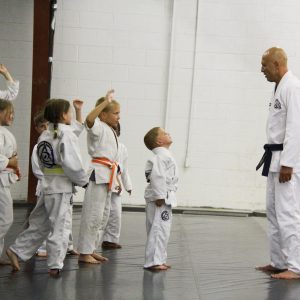
Brazilian Jiu-Jitsu gives children a safe, structured place to practice those skills. They learn through movement, problem-solving, teamwork, and age-appropriate challenges. The lessons do not stay on the mat. They show up at school, at home, on the playground, and in the way your child begins to carry themselves.
1. Real Confidence That Comes From Doing Hard Things
Children can tell the difference between being praised and truly earning an accomplishment. In Jiu-Jitsu, confidence grows one small victory at a time.
Your child learns a new movement, practices it, struggles with it, and eventually makes it work. They discover that improvement is not magic. It comes from patience, effort, and the willingness to keep trying.
That creates a quieter, stronger kind of confidence—the kind that does not disappear the moment something becomes difficult.
2. Practical Skills for Handling Bullying
Most moms do not want their child learning to start fights. They want their child to feel safe, avoid conflict when possible, and know what to do if someone grabs, pushes, pins, or threatens them.
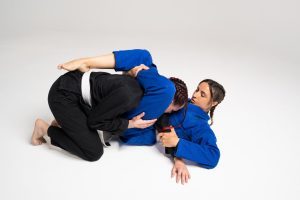
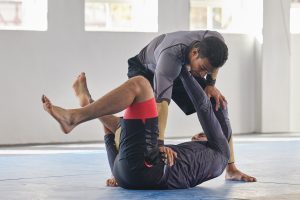
Brazilian Jiu-Jitsu focuses on control, leverage, escapes, and restraint. Children learn that protecting themselves does not require wild punching or escalating a dangerous situation.
Just as important, training often changes the way a child carries themselves. Better posture, stronger eye contact, calmer reactions, and greater self-belief can make them less appealing as a target.
3. Better Focus in a Distracted World
Children are surrounded by screens, notifications, and constant stimulation. Jiu-Jitsu asks them to slow down, listen carefully, watch a technique, remember the steps, and apply what they learned with a partner.
During training, their attention has a purpose. They must notice where their hands are, where their partner’s weight is, and what should happen next.
Over time, many parents notice that their child becomes more comfortable following instructions, staying with a task, and working through frustration instead of immediately giving up.
4. Discipline Without Constant Lecturing
Discipline is easier for children to understand when they can feel the results. On the mat, listening leads to progress. Self-control keeps training safe. Consistent attendance creates improvement.
The instructor does not need to deliver a long speech about responsibility. The environment teaches it naturally.
Your child begins to understand that how they behave affects their teammates, their learning, and their own success. That lesson can carry into homework, chores, school, and family life.
5. A Healthy Outlet for Energy and Stress
Some children have energy that seems endless. Others carry stress quietly and do not always know how to express it. Jiu-Jitsu gives both types of children a productive physical outlet.
Classes involve movement, coordination, strength, balance, and controlled resistance. Children work hard, but they are also thinking and engaging with others.
Instead of simply exhausting them, training helps them learn how to direct their energy. Many children leave class calmer, more settled, and proud of what they accomplished.
6. Strength, Balance, and Coordination
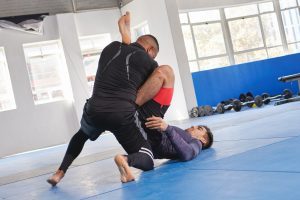
Brazilian Jiu-Jitsu develops the whole body. Children crawl, bridge, turn, balance, grip, pull, push, and move in ways that build useful athletic ability.
They are not limited to one repetitive motion. They learn how their body works in different positions and how to move with control.
This can help children who already play other sports, but it is also valuable for children who have never felt naturally athletic. Progress is personal, and every child has opportunities to improve.
7. Resilience When Things Do Not Go Their Way
Your child will not win every round. A technique will sometimes fail. A partner may solve the problem first. That is not a flaw in the program—it is one of its greatest benefits.
Jiu-Jitsu teaches children how to experience a setback without turning it into a personal crisis. They learn to pause, reset, ask questions, and try again.
That emotional skill matters far beyond martial arts. School becomes harder. Friendships become complicated. Life does not always feel fair. Resilient children are better prepared to keep moving forward.
8. Social Skills Built Through Real Cooperation
Jiu-Jitsu cannot be learned alone. Children need partners, and partners need trust.
They learn how to take turns, communicate, respect boundaries, help someone practice, and manage both winning and losing with good character.
Because everyone is learning together, children often form friendships across different ages, schools, personalities, and backgrounds. The shared experience gives them an easy way to connect.
9. Healthy Habits That Begin to Feel Personal
Children are more likely to care about sleep, food, hydration, and consistency when they notice how those choices affect something they enjoy.
A child who feels stronger after a good night’s sleep begins to understand why rest matters. A child who wants to improve becomes more willing to attend regularly and take care of their body.
Healthy habits stop feeling like rules imposed by Mom and begin to feel connected to the child’s own goals.
10. A Skill They Can Continue for Years
Many childhood activities eventually disappear. Brazilian Jiu-Jitsu can grow with your child.
As they get older, the challenges become more advanced, but the core lessons remain: stay calm, use leverage, solve problems, respect your training partners, and keep improving.
It can become a healthy lifelong practice rather than a short season that ends when childhood does.
What If My Child Is Shy, Nervous, or Not Athletic?
That is exactly why many families try Jiu-Jitsu.
Your child does not need to arrive confident, coordinated, or fearless. They only need a supportive environment where they can begin at their current level.
A strong children’s program introduces skills gradually, pairs students thoughtfully, and makes safety and respect part of every class. Progress may look different for each child. For one child, success may be learning a technique. For another, it may be joining the group without holding Mom’s hand. Both matter.
The goal is not to turn every child into a competitor. The goal is to help each child become more capable than they were yesterday.
What Moms Should Look for in a Kids' Jiu-Jitsu Program
- Patient, engaged instructors who know how to teach children—not just martial arts.
- Clear class structure so children know what is expected.
- Age-appropriate instruction rather than treating small children like miniature adults.
- A culture of safety and respect where bullying, ego, and reckless behavior are not tolerated.
- Positive communication with parents about progress, concerns, and expectations.
- A trial opportunity so you can observe the environment before making a commitment.
The Best Way to Know Is to Let Your Child Try
You can read about confidence, discipline, resilience, and self-defense—but the real difference becomes clear when you watch your child step onto the mat.
A gives your family a chance to meet the instructors, see the culture, and discover whether Brazilian Jiu-Jitsu feels like the right fit.
No experience required. Beginners are welcome.